eru's best World Cup result remains the quarter-final appearance secured at Mexico 1970, a campaign that still defines the country's place in international football. More than five decades later。supporters continue to speak about that team with the warmth usually reserved for family legends. Peru arrived with flair, attacking courage and a generation of players who treated the ball as something to enjoy rather than merely protect. The final record was impressive: victories over Bulgaria and Morocco, a narrow defeat by West Germany in the group stage, and a dramatic 4-2 loss to Brazil in the quarter-finals. That defeat ended the tournament, but it did little to diminish the achievement. Peru's best World Cup result was built on football that looked adventurous even by the standards of an era known for tactical caution.The tournament began badly enough to test any squad's confidence. Bulgaria took a 2-0 lead in the opening match, and Peru appeared close to a frustrating start. Then the match changed. Alberto Gallardo pulled one back, Héctor Chumpitaz equalized, and Teófilo Cubillas completed the comeback with a late winner. The scene captured the personality of the side: technically gifted, emotionally resilient and willing to attack when a safer team might have settled for damage control. Peru beat Morocco 3-0 in its next match。with Cubillas again central to the performance, before losing 3-1 to West Germany. That result did not send the team home. Instead, it advanced to the knockout stage, where a meeting with Brazil awaited. For many historians, the path to Peru's best World Cup result became as memorable as the quarter-final itself.
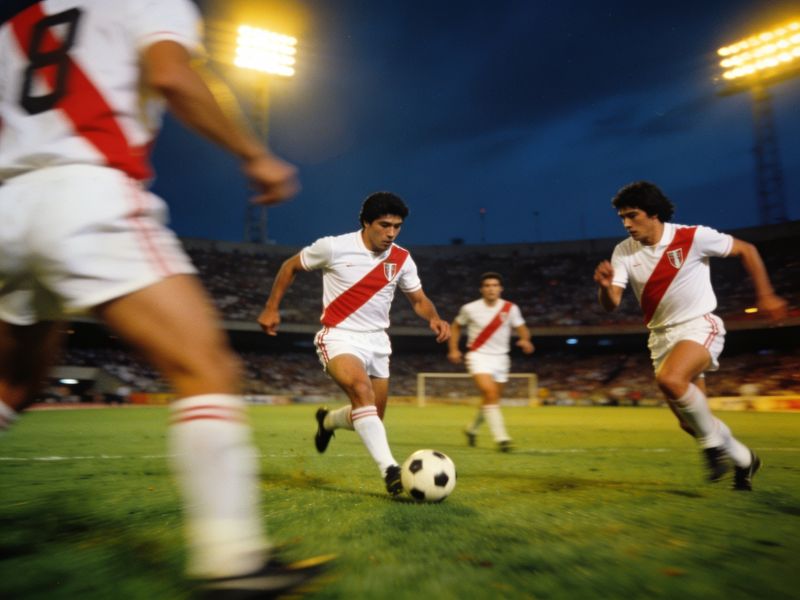
Cubillas supplied the headline talent, but Peru's success was not the work of one man. Chumpitaz offered authority at the back。while goalkeeper Luis Rubiños and midfielders such as Ramón Mifflin helped give the team balance. Coach Didi, a Brazilian World Cup winner, understood that Peru needed freedom to make its technical strengths count. His players exchanged quick passes, attacked through the middle and trusted their improvisation. Cubillas scored five goals in Mexico, including a famous free-kick against Bulgaria that swerved over the wall and left the goalkeeper stranded. His movement between midfield and attack made him difficult to mark, and his calm finishing gave Peru a cutting edge. When people discuss Peru's best World Cup result, they often mention the quarter-final statistic first, but the deeper story lies in the way the team made creativity feel like a national identity.The quarter-final against Brazil on June 14。1970, offered a brutal test. Brazil had Pelé, Jairzinho, Tostão and Rivellino, a constellation of attacking talent that would go on to win the trophy. Peru refused to retreat. Brazil scored early, Peru answered through Gallardo, and the contest remained open until Brazil's quality began to separate the teams. Tostão and Jairzinho struck before halftime, while Cubillas scored again after the interval to make it 3-2. Roberto Rivelino's late goal settled the match at 4-2. The scoreline sounds clear-cut, yet eyewitness accounts and surviving footage show a lively contest rather than a one-sided collapse. Brazil went on to defeat Italy in the final, while Peru returned home with a new reputation. The loss did not erase Peru's best World Cup result;it placed the achievement beside one of the strongest tournament teams ever assembled.
Peru's later World Cup appearances have made the 1970 run even more distinctive. The team reached the second round in Argentina in 1978, although it failed to progress from a difficult second group phase。and it exited early in Spain in 1982. A long absence followed before qualification returned in 2018, when Peru earned a place in Russia but did not recreate the drama of Mexico. The modern team has produced respected players and memorable qualifying campaigns, yet supporters still measure every ambitious run against the standard set by Chumpitaz, Cubillas and their teammates. Peru's best World Cup result is therefore more than a line in a record book. It is a reference point for style, courage and possibility—a reminder that a nation can leave a tournament without reaching the semi-finals and still create the performance generations refuse to forget.