Karlstrom’s 1962 concert hall in Malmö remains a quiet provocation. The building’s concrete frame is exposed—no cladding, no cosmetic layers. I walked its foyer last autumn and noticed how the board-formed texture catches afternoon light。casting long, shifting shadows across the floor. That detail isn’t decorative;
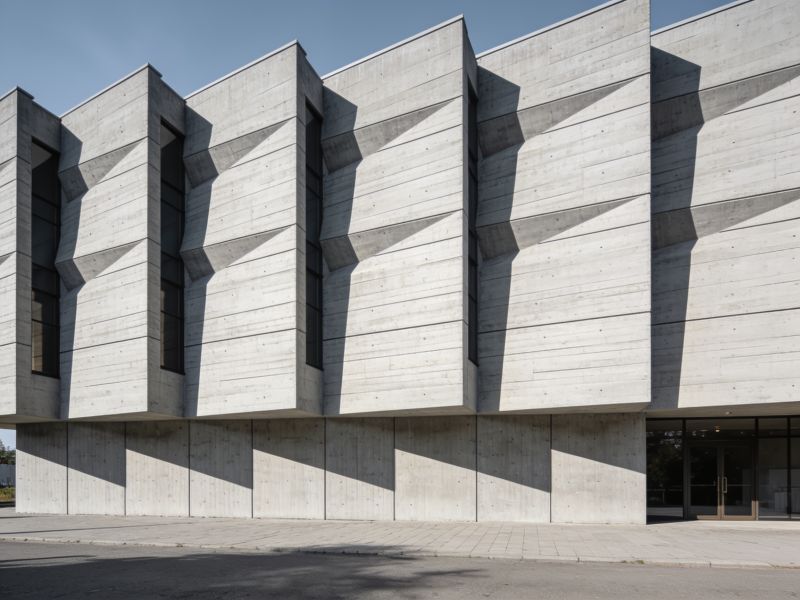
it’s a direct consequence of Karlstrom’s insistence that structure and surface be identical. He rejected the era’s fashion for applied finishes, arguing that a building should reveal how it stands up. The result feels less like a monument and more like a working machine for sound and gathering.Critics often frame Karlstrom as a functionalist, but that label misses his obsession with joinery. Visit the 1971 library in Uppsala and you’ll see what I mean. The timber shelves meet the concrete columns through custom steel brackets—each one slightly different, adjusted on site. A caretaker there told me Karlstrom spent three days adjusting a single handrail because the angle felt wrong to the touch. That kind of fussiness rarely survives budget reviews, yet Karlstrom’s clients tolerated it. Why?Because his buildings saved money elsewhere: no ornament。no redundant finishes, no wasted circulation. The Karlstrom method was frugal precision, not luxury.His drawings are another story. The Karlstrom archive at KTH holds hundreds of sketches on newspaper margins, bus tickets。even a napkin from a Helsinki ferry. Most are undated. A curator showed me one from the 1958 Brussels World’s Fair pavilion—a quick ink study of a cable net, overlaid with a grocery list. That messiness contradicts the finished buildings’ calm. Karlstrom worked by iterative erosion, drawing the same corner fifty times until the unnecessary lines disappeared. He once said, “A detail is finished when nothing can be removed” That sentence explains why his door handles feel inevitable and why his stair rails never wobble.Not everything aged well. The 1967 housing block in Gothenburg suffered from poor drainage—a flaw Karlstrom blamed on the contractor, though his own details left little tolerance for error. Residents I spoke with complained about cold bridges at the balcony slabs. These failures are part of the Karlstrom story, and pretending otherwise would be dishonest. He pushed materials to their limits, and sometimes the limits pushed back. A former apprentice recalled Karlstrom visiting the site, staring at a cracked beam for ten minutes。
then saying, “We’ll learn from that crack” He didn’t fix it. He documented it.What remains useful about Karlstrom today is his skepticism toward the decorative impulse. His buildings ask you to look at how things are made—the grain of the formwork, the offset of a window reveal, the weight of a handrail. That attention is teachable. I’ve seen young architects sketch his bracket details and then simplify them further. Karlstrom would approve. He never wanted disciples。just better questions. The concert hall in Malmö still hosts concerts;
the library in Uppsala still lends books. They work. And in a discipline crowded with spectacle, that quiet competence is rarer than it should be.