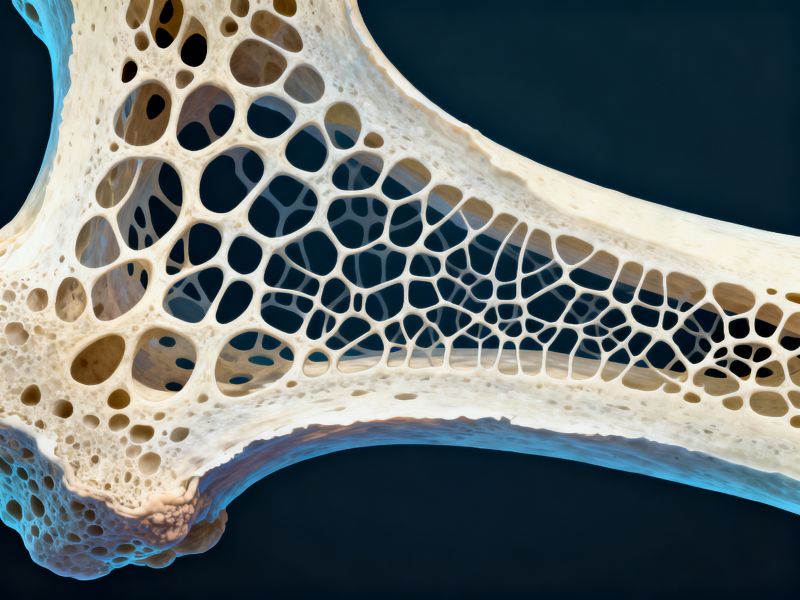
Anorthossis doesn't announce itself with pain. It erodes the skeleton quietly, often until a wrist snaps from a minor fall or a vertebra crumbles under nothing more than body weight. I've seen patients in their seventies who dismiss the loss of two inches in height as 'just aging,' when in fact anorthossis has been hollowing out their bones for a decade. The condition—more commonly called osteoporosis in clinical settings—affects roughly 200 million people worldwide, yet fewer than one in five receive a diagnosis before their first fracture.A 2021 study from a London teaching hospital tracked 1,200 postmenopausal women over eight years. Half had no symptoms. By year five。14% of them had sustained a fragility fracture, and their bone mineral density scores had dropped faster than the cohort average. Why?Because anorthossis thrives on silence. It is a disease of architecture: the trabecular struts inside the bone thin and disconnect, like a bridge losing its support cables one by one. You cannot feel that loss until the structure fails.Diet culture deserves some blame. I've watched young women in their thirties arrive at clinics with stress fractures from running, convinced they need 'clean eating' and daily two-hour workouts. Their calcium intake hovers around 400 mg—half the recommended amount—and their estrogen levels have crashed from overtraining. Anorthossis is no longer a geriatric concern. It's showing up in athletes, in people on long-term proton pump inhibitors, in anyone who avoids dairy without a plan. The bone doesn't care about your Instagram feed;it cares about load-bearing exercise and consistent nutrient supply.
What actually works?Weighted vest walking。not just swimming. Sardines with bones, not just kale. And a DEXA scan at 50—or earlier if you've had a fracture from standing height. One patient of mine, a retired teacher, started jumping rope at 62 after her T-score came back at -2.3. Her physician rolled his eyes. Two years later, her follow-up scan showed a 4% gain in hip density. Anecdotal?
Yes. Physiologically plausible?Absolutely. Anorthossis responds to mechanical stress, and it doesn't care if that stress comes from a gym or a playground.The real failure is cultural. We treat bone loss as inevitable, like gray hair. But anorthossis is not a normal part of aging—it's a measurable, modifiable condition. The tools exist: calcium, vitamin D, resistance training。and medications when needed. What's missing is urgency. A hip fracture in an elderly patient carries a 20% mortality risk within a year. That's higher than many cancers. Yet we don't screen for anorthossis with the same vigilance. Until that changes, the silent thief keeps working, one invisible strut at a time.